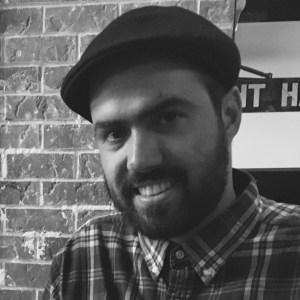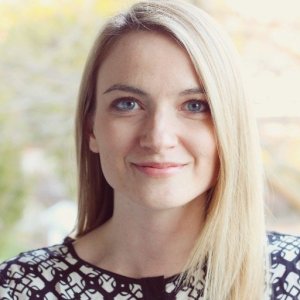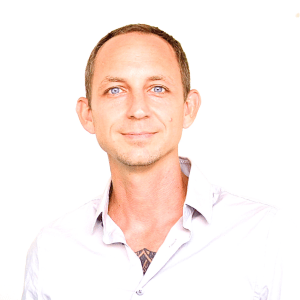
Alexander Lee

Artist

Exhibition | ‘A Temporary Futures Institute’

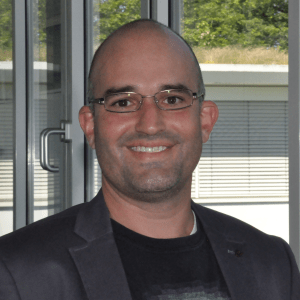
Alexander Lee was born in Stockton, CA, and grew-up on the island of Tahiti, French Polynesia. He earned his BFA from the School of Visual Arts (2000), his MFA from Columbia University (2002), and MPS from the Interactive Telecommunications Program at New York University (2004). Lee’ s 2006-2007 trilogy, THE DEPARTURE OF THE FISH, titled after the creation myth of the island of Tahiti, turns a narrative material, through volcanic sand and the vernacualr of natural history museum displays, storytelling, and the anthropic process. In 2014, Lee’s THE BOTANIST, a visual retelling of the legend of the breadfruit through early English botanical endeavours in the Pacific, is the beginning of a subsequent series, THE BOTANICAL FACTORY that tackles the cultural practice of oral history through communal efforts. In 2017, TE ATUA VAHINE MANA RA O PERE for the 1st Honolulu Biennale, draws an evolutionary trajectory between Pele and the nuclear mushroom cloud, in reference to the US and France’s Pacific test sites. THE SENTINELS, a continuous wall painting spanning 4500m2 at the Museum of Contemporary Art Antwerp, visually hosts A Temporary Futures Institute, making apparent the motifs and signs of Polynesia as the environmental matrix to Futurist James Dator’s thinking. Most currently, ME-TI’A, An Island Standing, is a meditation on the images that an uninhabited island conjures, and human interactions through technological progress. It premieres as part of Tidalectics at the TBA21 / Thyssen-Bornemisza Art Contemporary, Wien.
Denis Maksimov

Curator/Researcher
Avenir Institute

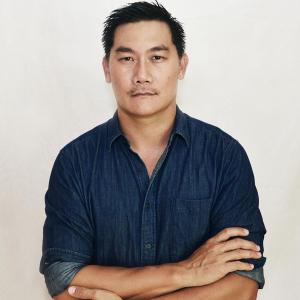
Denis Maksimov is an independent curator, researcher and theorist of art, politics and visual culture and the founder of the transdisciplinairy Avenir Institute. He investigates relations between aesthetics and power, post-structuralist thought and geopolitics, critical theory and international political economy, style and epistemology, historical analysis and futures studies. Denis has been working in strategic consultancy since 2006 in Moscow and continues an independent practice in Belgium and other countries.

Matías Mateu

Technical Manager
Plan Ceibal

Presentation | Plan Ceibal 2020: Technology and Education foresight through Delphi Study

Matías Mateu is the Technical Manager at Plan Ceibal since 2012. He has co-led the implementation of infrastructure and new technologies in Uruguayan Education System for more than 9 years. Mateu is also co-leading Plan Ceibal’s strategy to develop big data analytics and prospective process of #edtech. He holds a M.Sc. in Innovation Management (2016), a Diploma in Telecommunications Engineering (2013) and a Degree in Electrical Engineering (2006) all from Universidad de la República, Uruguay.

Jennifer McDougall

Talent Developer; Professor 
Wilfred Laurier; Sheridan College

Workshop | Designing artifacts for the Nature Deficit Disorder (NDD) Clinic

Jennifer is a facilitator, design researcher and futurist enthusiastic about imagining possible futures, collecting stories on human experiences and engaging in dialogues on what could be. She has facilitated leadership development and social justice workshops internationally, taught courses in Research Methods for Human-Centered Design and has worked collaboratively to design futures interventions for leaders in sustainable development and environmental justice. Jennifer earned her BBA with an International Concentration from Wilfrid Laurier University and her MDes in Strategic Foresight and Innovation from OCAD University.

The Nature Deficit Disorder (NDD) Clinic is a playful intervention set in the year 2040, that explores one plausible culmination of many emerging trends – the concept of open and free access to nature in the urban environment being neglected, government austerity measures cutting budgets to upkeep public spaces, hyperconnectivity, income inequality on the rise, and precarious weather.

An Mertens

Artist/Researcher
Constant

Tour | Trees as Futures Thinking Tools

An Mertens is an artist, storyteller and nature guide. She is a core member of Constant, a Brussels-based non-profit organisation for art and media with a focus on free software, feminist methodologies and free culture. An conducts research projects on how algorithms and code transform (literary) creation. Apart of that, she also started a series as ‘boomgriffier’ or ‘tree clerk’. http://www.constantvzw.orghttp://www.boomgriffier.eu


Trees are privileged witnesses of life on this planet. Most often they largely survive us as a species. Planting a tree is always a future oriented action. Observing trees can therefore inspire us to surprising perspectives on futures, presents and pasts. Storyteller and nature guide An Mertens introduces you to some of the trees that live in the neighbourhood of Muhka. Each of the chosen trees invites you in the specific context of this part of the city to reflect on one of the four future scenarios presented by the Temporary Futures Institute. Your guide assumes that the futurists participating in this walk will come up with many more future thinking techniques, once they enter in conversation with the trees.

Tyler Mongan

Innovation Consultant; Doctoral Candidate
Heart Lab LLC; Quantum Medicine University

Workshop | Cultivating Physiological Coherence with Possible Futures

Tyler Mongan is the founder and lead researcher at Heart Lab. He researches the latest in neuroscience, heart-brain communication, human behavior, team dynamics, and quantum theory and applies his discoveries to develop innovation strategies for the emerging business landscape. He speaks at conferences, trains start-ups and consults fortune 500 businesses internationally on actionable innovation and human physiology science to help business leaders understand the link between physiological states and business innovation and forecasting. Tyler has launched seven business organizations, is a published biochemist, attended medical school, is a Hawaii Music Award nominated musician, an avid surfer, and is a Ph.D. candidate at Quantum University studying physiological coherence and possible futures.

Research on heart-brain coherence suggests simple techniques for experiencing enhanced cognitive function, increased creativity, and group collaboration. A physiological based approach to foresight allows us to understand how to cultivate more optimal physiological states for not only thinking into the future, but also feeling into the future. The idea is that we can begin to develop empathy with a possible future.

Sheila Ochugboju

Co-Founder and Director
Africa Knows

Dr Sheila Ochugboju has been active in the design and implementation of futures programmes for organisations and governments in sub-Saharan Africa over the last decade. She is the co-founder and Director of a knowledge management and media consultancy called Africa Knows. With support from the Rockefeller Foundation, her team is currently convening futures workshops across Africa to generate insights from emerging leaders on the most promising solutions to economic, social, and environmental challenges. In her role as the Global Roving Ambassador for The County Government of Kisumu, Kenya, her team convened a futures workshop for government leaders, along with international advisors and key influencers to develop strategies on “Transforming Kisumu – Enabling Technologies for Smart Cities and Resilient Economies” Jul 5-7th, 2016, Bellagio Center, Italy. She is currently leading a new initiative called The Barefoot Digital Youth Squad” which aims to train millions of young people across Africa to contribute to the Africa Data Revolution. Sheila holds a Ph.D in Biochemistry and was the Daphne Jackson Trust Research Fellow at St Hilda’s College, Oxford. She is a TED Fellow, co-Curator of TEDxNairobi and in New York, Oct 2016, she was awarded the Wings World Quest Foundation “Women of Discovery” Award for Humanity.

Stefanie Ollenburg

Futurist and Designer
Freie Universität Berlin

Presentation | A Model for Design and Futures Studies

Stefanie Ollenburg, lives in Berlin, Germany. She works as a consulting futurist and a communication designer, aiming to translate innovative ideas into real life projects. She also lectures at the Humboldt University in Berlin and the FH Münster on design and future studies. After Stefanie received her B.F.A. (Bachelor of Fine Arts) in advertising design from the Academy of Art University, San Francisco, CA (USA) she worked as an art and creative director for international agencies in New York, Vienna and Berlin. But her aspiration to support sustainability projects drove Stefanie to go back to school. She studied at the Freie University in Berlin and received her M.A. in Futures Studies. Currently Stefanie also works pro-bono in the project: “D2030 – a map for the future” (d2030.de). It is an open-source scenario process to show the risks and possibilities for Germany until the year 2030. Its objective is to nationally establish an active dialog about these future scenarios. Stefanie’s goal is to generate an understanding of futures thinking within groups and organizations, because: We need to keep in mind that today’s decisions affect how the future will become. And different plots i.e. actions will create different narratives of the futures.

This presentation proposes a model for a process that recognises that transformation needs both futures studies ánd design: a mindset that is open for alternatives and different viewpoints and ideas to create something tangible to result in projects that are visionary yet reachable.

Aaron Rosa

Research Scientist
Fraunhofer Institute for Systems and Innovation Research (ISI)

Case study | Boundary Objects and World-Tweening: Dynamic Entities across Alternative Futures

Dr. Aaron B. Rosa is currently a research scientist in the Foresight department of the Fraunhofer Institute for Systems and Innovation Research (ISI) and has worked on numerous EU funded research projects (INCOBRA, BOHEMIA, PROGRESS, CIMULACT, and others), as well as projects for the German government and private clientele. He is also a founding member of ROROSORO, a futures research and design company with a focus on developing games and interactive systems for conducting futures-oriented investigations and creative projects.
His project portfolio includes work with the Prime Minister’s Office of the United Arab Emirates, The European Commission Joint Research Center, the United Nations Development Program, and the Federal Ministry of Economics and Technology (Germany). As a graduate of the University of Hawaii at Manoa’s Alternative Futures graduate program, he continues to be driven towards research in participatory futures methods and practices across many media.

Ziauddin Sardar

Islamic Studies and Futures Studies scholar
The Centre for Postnormal Policy & Futures Studies

Ziauddin Sardar, writer, broadcaster and cultural critic, is Professor of Law and Society at Middlesex University, London. He has been described as a ‘critical polymath’ and is considered one of the top 100 public intellectuals in Britain. He works across a number of disciplines ranging from Islamic studies and futures studies to science policy, literary criticism, information science to cultural relations, art criticism and critical theory. Sardar has worked as science journalist for Nature and New Scientist and as a television reporter for London Weekend Television. He was a columnist on the New Statesman for a number of years and has served as a Commissioner for the Equality and Human Rights Commission and as a member of the Interim National Security Forum. He has published over 50 books.  Sardar was the editor of Futures, the monthly journal of policy, planning and futures studies, from 1999—2013, and now serves as a Consulting Editor. Widely known for his radio and television appearances, he is currently co-editor of the quarterly journal Critical Muslim.