Mei-Mei Song

Professor 
Graduate Institute of Futures Studies, Tamkang University

Exhibition | ‘A Temporary Futures Institute’
Presentation | A Creative Peace Futures Workshop on futures of South China Sea

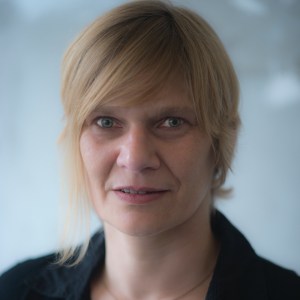
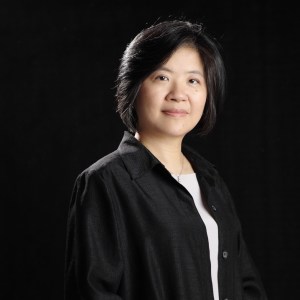
Mei-Mei Song, EdD is a futurist and an educator. She is an Associate Professor in the Graduate Institute of Futures Studies as well as the Founder and Director of the Center for Futures Intelligence and Research (C-FAR), Tamkang University, Taiwan. Dr. Song’s recent research centers around newer ways of teaching futures studies such as experiential futures, gamification of futures tools, and integration of futures thinking and design thinking, particularly in engineering education. With more than 10 years of teaching futures courses at undergraduate and graduate levels, Dr. Song also devotes herself to the outreach of futures education in various sectors in recent years. She facilitates futures thinking workshops for a wide range of participants in business, government, and education sectors. Dr. Song is a Fellow of World Futures Studies Federation (WFSF). From 2007 to 2010, she was Managing Editor of the Journal of Futures Studies. Dr. Song earned her MA and Doctor of Education from Teachers College, Columbia University, USA (2001).
John Sweeney

Global Futures and Foresight Coordinator
International Federation of Red Cross and Red Crescent Societies

Exhibition | ‘A Temporary Futures Institute’
Case study | Anticipatory capacity for the IFRC.

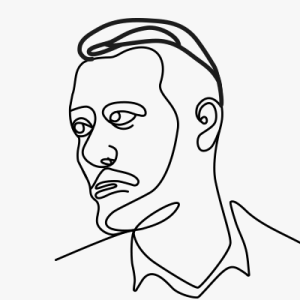
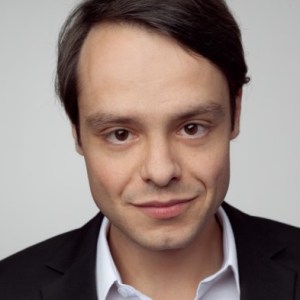
John A. Sweeney is an award-winning author, designer, and futurist. As a practitioner, consultant, and educator, John has delivered workshops and seminars, multi-stakeholder projects, and foresight gaming systems in over two dozen countries, with a particular focus on the Balkans, Southeast Asia, and the Asia-Pacific region. John is a PhD Candidate in the Department of Political Science at the University of Hawaii at Mānoa (UHM) where he has instructed undergraduate courses in Futures Studies, Political Science, and World Religions. John served as a Researcher at the Hawaii Research Center for Futures Studies under the direction of Jim Dator until his retirement in 2015. Currently, John is the Global Futures and Foresight Coordinator at the International Federation of Red Cross and Red Crescent Societies.

The International Federation of Red Cross and Red Crescent Societies (IFRC) recently inaugurated an aggressive campaign to “use the future.” As the world’s largest humanitarian organization with representation in 190 countries, Red Cross and Red Crescent Societies operate at the frontlines of major crises around the world–making them decidedly present-centric institutions. With the launch of the Solferino Academy, the IFRC seeks to shift the overarching narrative of the organization and develop anticipatory capacities at local, national, regional, and global scales. This presentation provides an overview of the Solferino Academy and highlights ongoing work around the world.

Björn Theis

Foresight Manager
Evonik Creavis GmbH

Game session | Foresight game centred on “Future Disruptions”

Björn Theis is Foresight Manager at Evonik Creavis GmbH, the strategic innovation unit of Evonik AG. Here, he is currently heading the Corporate Foresight project “GameChanger”. Björn Theis also teaches future studies at Freie Universität Berlin. His currently research interest is bringing the voice of “common people” into discourses about the future by applying methods of culture anthropology. He previously worked as a senior foresight consultant at Z_punkt GmbH.


Using gaming techniques such as randomisation and competition, players then “attack” each building block, supported by a set of cards, and can “score” by identifying credible and plausible future disruptions. At the end of the game, many parts of the system will have been changed by possible future disruptions.

Matti Vainio

Artist

Performance | A Drawing Performance

Matti Vainio (born 1978) graduated for the first time an artist from Turku Arts Academy in 2003 and to Master of Arts degree Art and Design in 2013. Vainio works with many medias; drawing, painting, and through performances. He has been working with different art collectives from the year 2003. His art explores the individual’s possibilities in society and wonder upon phenomena of everyday life. Vainio’s artistic strategy is to create an emotionally rich art piece that opens the perception to the difficulty of encountering Self and other people. Vainio’s works has been shown in Sweden, England, Russia, German and Estonia and next show will be shown at KIASMA Contemporary Art Museum of Finland and in Estonia Vabaduse gallery.

A drawing performance to look at the future status of human experience.

Maya Van Leemput

Futurist Researcher
Erasmus Hogeschool; Agence Future

Exhibition | ‘A Temporary Futures Institute’
Presentation | Futures Course First Time Report

Maya van Leemput is a professional futurist combining research and consultancy with a creative multi-media practice. Next to her independent practice she is senior researcher developing the new centre of expertise Applied Futures Research – Open Time at the Erasmus Hogeschool. Maya’s background is in media studies, having attained a Ph.D. from the University of Westminster in 02001 for her research on “Visions of the Future on Television.” Her forward looking work on media, culture, arts, (cross-cultural) communication, development, science and technology in society and urban environments is based in critical theory and uses experimental, creative and participatory approaches. Since 1999 she partners with visual artist Bram Goots on Agence Future (AF), a long-term independent project for exploring images of the future through conversation and intercultural experiment.  The project started with a field journey for ethnographic futures research in 25 countries on five continents. The project continued with recorded futures conversations in various settings and contexts. In 2014 Agence Future completed the three-year extracurricular development education project MAONO that brought students from Brussels (Belgium) and Lubumbashi (Democratic Republic of Congo) together with Congolese artists for the co-creation of images of the future, culminating in a campus event and a one month exhibition at the Museum of Contemporary Art Antwerp. Maya also leads the World Futures Studies Federation’s ‘World Futures Learing Lab’ project that has been active since 2012 with the support of the UNESCO Participation Programme and that has provided extra-curricular educational activities in six locations in the global South for over 300 participants.

Maheen Zaidi

Co-Founder; Masters Student
The Innovation Shop; OCAD University

Experiential | Prodigy AI
Presentation | Building a Better World Through Science Fiction

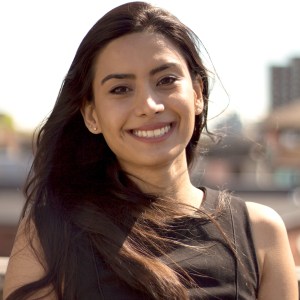
Maheen is co-founder of The Innovation Shop, a design consultancy in Toronto. She specializes in strategic foresight, systemic design, transition design, and narrative design. She is completing a Masters of Design in Strategic Foresight and Innovation from OCAD University, and has an Honours Bachelor of Business Administration from York University. Her thesis explores the intersection of civilizational foresight, transition design, and science fiction. A staunch believer that language is a critical medium of design and that foresight should be ambient, Maheen is a science fiction writer. In her previous life, she was a marketing executive who worked with multi-nationals, startups, and scale-ups to build brand equity.

Join us as we unveil the next generation of AI companions. At Gepetto Inc., we have spent the past 10 years developing a revolutionary toy that is more human than human. It walks, it talks, it feels, and it plays. Prodigy will transform your child’s life.

‘Prodigy’ is designed to examine the themes of artificial intelligence and the inevitable complexities that arise from the relationships between humans and anthropomorphized devices. Though most depictions of AI are dystopian, there are more nuanced and complex plausibilities that could emerge–ones that do not involve destruction but will challenge what it means to be human. How will we reconcile contrasting notions of ‘human’ and how will our decisions impact our lives? Are we prepared for this uncertain future? This 20-minute experiential future will be followed by a group discussion to critically examine the implication of such a future.

‘Building a Better World Through Science Fiction’ is an exploration of why science fiction literature does not prescribe models of change that inform social innovation and civilizational foresight.